|
Many thanks for permission to use graphics from their software and toposheets |
|
|
14 October 2006Journey's End Revisited
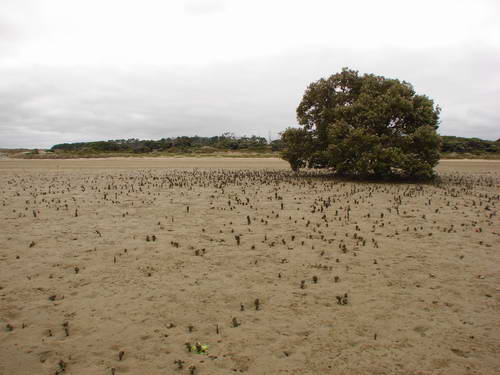
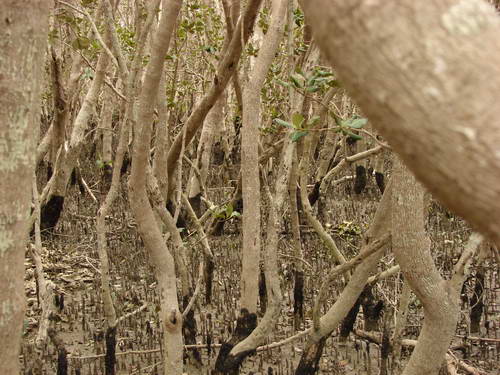
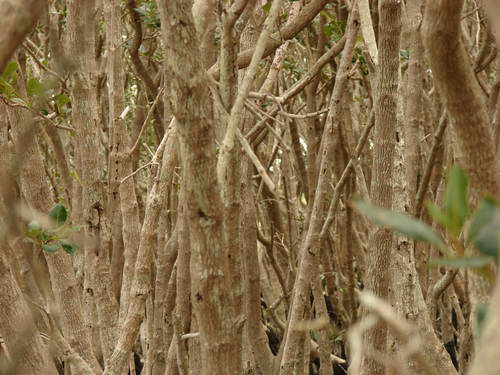
Around the mangroves the sand, though slightly muddy is still quite firm. The aerial roots of the mangroves trace the pattern of the main roots, and we are amazed at the distance from the tree these roots travel.
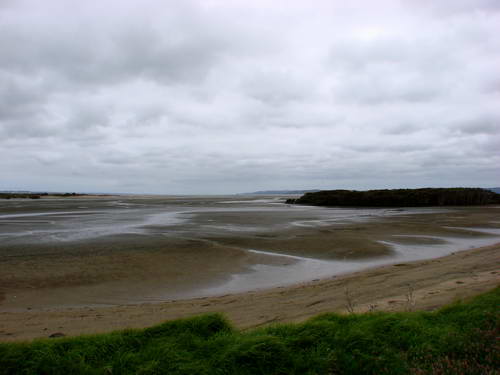
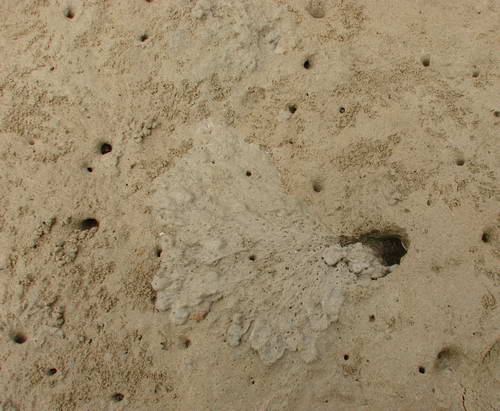
When Miranda and I were here last time the tide was in much further. This time, further out, there are hundreds and hundreds of crab holes, with evidence of recent excavation. I've never seen this before - or certainly not as prevalent.
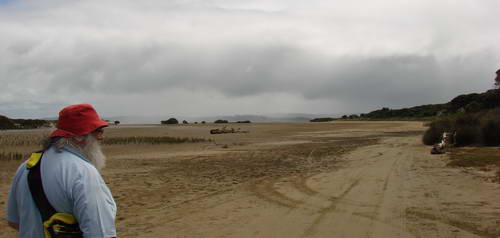
We head south along the beach to the end of the spit.
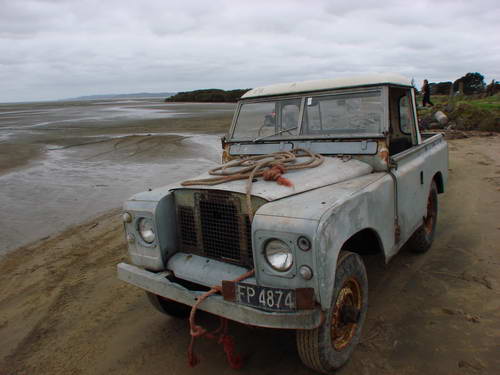
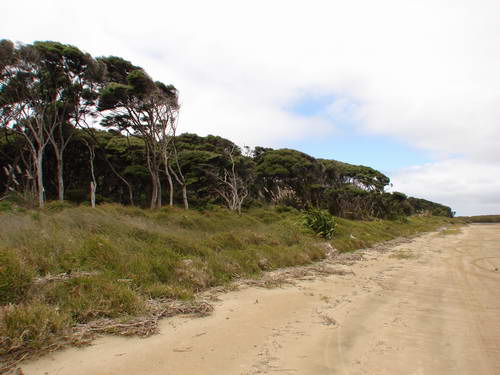
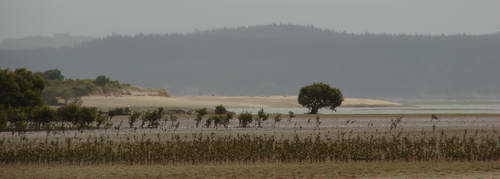
Even up here near high tide mark the sand is firm enough for vehicles. The vegetation shows just how strong the westerlies are, even in the lee of the long offshore island. I am shivering even with a thermal T under my shirt.
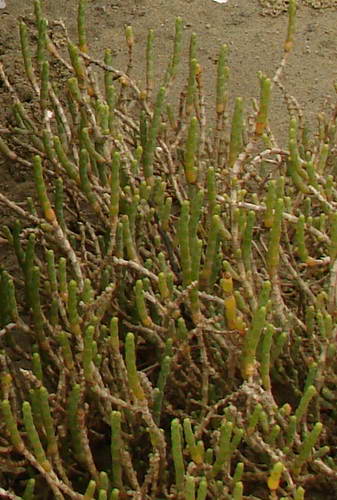
Beside a driftwood log, a small patch of Salicornia australis is thriving. The Latin translates literally as the European name, Southern Salthorn. I don't currently have a Maori name for this. We follow the vehicle tracks round the end of the spit
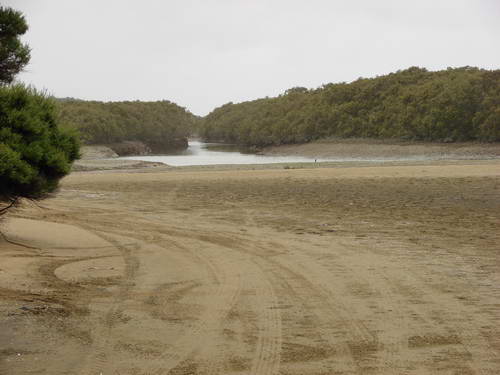
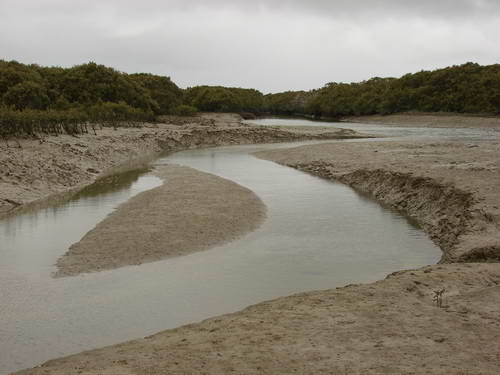
where two streams join, and the sand gives way to mud.
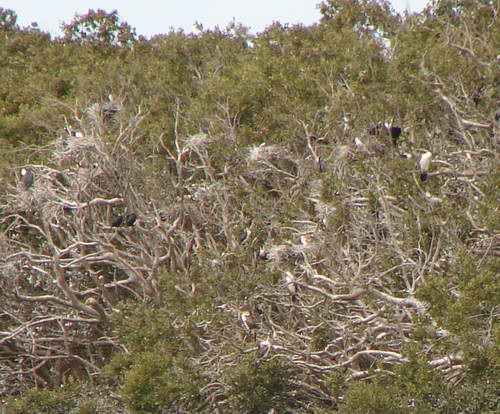
Just to the right of middle you can make out a dead tree on the far bank. It's the nesting tree for a shag colony. So acid are their faeces that nesting trees do not survive long. Dan switches to telephoto
The rain looks as though it might set in as we start back towards the van, and the wind is, if anything, even stronger.
On the way back, we detour for a closer look at the mangroves. This lot are all wearing gumboots.
You'd have a job bushcrashing though this stuff without a chainsaw.
Even a small splash of colour stands out in a landscape like this
|
|